
Hangman
Senior GamesWord
4.611.32K Reviews
- Version
- 6.0.62
- Installs
- 50.00M
- Age Rating
- Everyone
Screenshots
Our Review of Hangman
 Analysis by Appyee
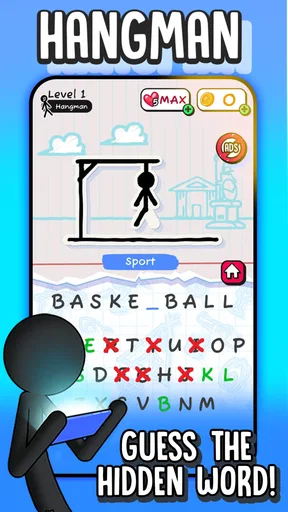
Hangman is the kind of word game I can open for a few minutes without needing to learn a complicated system first. The basic idea is familiar: I try to uncover a hidden word by choosing letters, while each wrong guess moves the drawing closer to completion. What makes this version more useful than a quick novelty is the mix of ordinary puzzle play and battles, giving it a little more variety than a single-player guessing screen.
Senior Games has kept the presentation approachable, which matters for a game that is often played casually. I can use it during a short break, hand it to someone who enjoys vocabulary games, or return to it when I want something quieter than an action title. It is free to start and rated for Everyone, so it is easy to recommend for mixed-age households. The trade-off is that optional in-app purchases range from $0.49 to $30.99 per item, so I would pay attention to purchase prompts rather than treating the free label as meaning every convenience is unlimited.
What playing it actually feels like
I find the appeal here is how quickly a round turns a familiar word pattern into a small decision-making exercise: each letter can narrow the answer, but a careless guess costs you. In this section, I’ll look at how that rhythm works for relaxed solo play and why the battle option changes the feel, then consider what those choices mean for the game’s everyday value.
A familiar rule set with enough pressure to stay interesting
The strongest part of this game is its immediate readability. I do not have to decode a map, build a team, or remember a long tutorial before making the first useful decision. The hidden word is visible as a pattern, and every letter I choose gives me information. That makes each round feel like a small reasoning exercise rather than a test of reflexes.
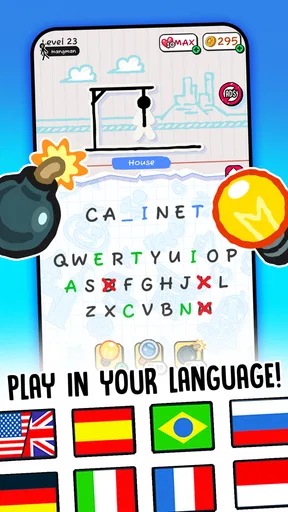
I find the best moments come when the word is partly revealed but still uncertain. A repeated letter can change the likely answer, while a wrong guess can remove an entire group of possibilities. That encourages me to think about common letter combinations instead of tapping randomly. If I am playing with a child, the same process becomes a gentle way to discuss spelling and word patterns without turning the session into a formal lesson.
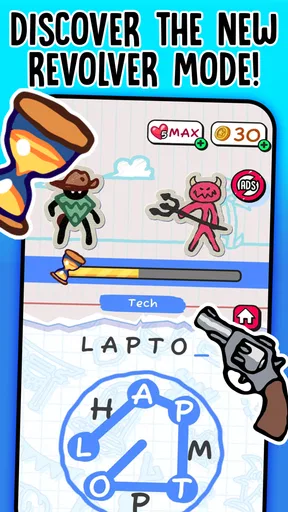
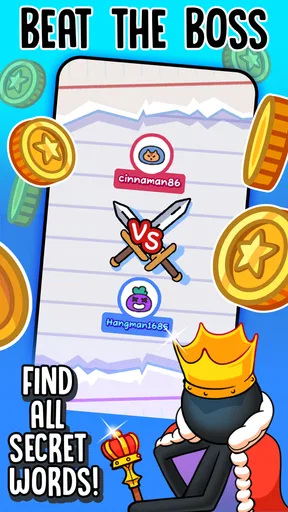
The battle element changes the mood. A solo puzzle lets me take my time and experiment, while a competitive round makes each guess feel more costly. I would choose the regular puzzle experience when I want a relaxed brain break and the battle side when I need a clearer sense of urgency. That distinction is useful because not every session calls for competition.
Where new players may get stuck
The main friction is not the rules; it is the vocabulary. A player who knows the mechanics but does not recognize the answer may feel that a loss reflects a lack of word knowledge rather than poor strategy. That is normal for this genre, but it can be discouraging if someone expects every puzzle to be solved through deduction alone.
My practical advice is to treat the visible pattern as evidence, not as a prompt to guess the first word that comes to mind. I start with letters that commonly appear in the language, then use the revealed positions to narrow the field. Once a word looks plausible, I check whether its length and repeated-letter pattern really fit before committing. This reduces the temptation to burn guesses on a hunch.
Another common sticking point is switching from solo play to battles. The same vocabulary skill is involved, but the emotional pressure is different. If a player is learning the game, I would spend a few short sessions getting comfortable with the letter pattern before judging the competitive mode. Losing early does not necessarily mean the mode is unfair; it may simply mean the player has not yet developed a reliable guessing rhythm.
Simple setup checks before blaming the game
Because this is a lightweight word game, I would begin with ordinary checks if it does not behave as expected. The first step is to confirm that the device meets the minimum operating-system requirement of Android 7.1. A phone running an older system can create installation or compatibility trouble before the game itself even opens properly.
I would also make sure the installation has completed normally, then close and reopen the app rather than repeatedly tapping a stalled screen. If a round appears not to respond, I would check whether the device is busy with another task and whether the connection is stable when the activity appears to depend on online communication. These are basic steps, but they often separate a temporary loading issue from a genuine game problem.
The current release is version 6.0.62, so I would check the relevant app store for an available update when the installed copy behaves differently from what I expect. Updating is particularly sensible after an operating-system change or when a problem began immediately after installation. I would avoid clearing app data as a first reaction, because that can remove local progress or settings depending on how the device handles stored information.
There is also a practical purchase check. Since the game is free but offers paid items, I would slow down around any confirmation screen and verify exactly what I am accepting. This is especially important on a shared family device. A player should not assume that tapping a helpful-looking button is always part of normal free play.
Recovering a session without making the problem worse
When a round is interrupted, I prefer a calm recovery sequence. I first leave the screen if the interface allows it, then relaunch the game. If that does not help, I restart the device and try again before making more drastic changes. Reinstalling should be a later option, not the automatic answer, because it may affect locally stored progress.
If the issue appears only in battles while ordinary word puzzles still work, I would compare the two experiences rather than concluding that the whole app is broken. A problem limited to one activity can point to a temporary connection or session issue. If every part of the game fails in the same way, then the installation or device environment becomes more likely to be involved.
I also recommend noting the exact moment the trouble occurs: during launch, while loading a word, after selecting a letter, or when entering a battle. That small detail makes troubleshooting more focused. It is much more useful than simply saying that “the game does not work,” particularly if the player later needs to contact Senior Games through the normal support route available on the platform.
One recovery habit is worth highlighting: do not repeatedly submit letters while the screen appears frozen. If the interface is delayed, rapid taps can create confusion about which inputs were accepted. Waiting briefly, leaving the screen, or restarting the session gives a cleaner result than trying to overpower a stalled interface.
When the app is not the cause
Not every disappointing round is a technical failure. Sometimes the real issue is expectation. Hangman is built around uncertainty, so a player who wants a fully logical puzzle with enough clues to guarantee a solution may prefer a crossword, a word-search game, or a dedicated daily word challenge. Those alternatives usually make the clue structure more central, while hangman makes letter risk the main decision.
It is also not the best choice for someone looking for a deep long-term progression system. The appeal here is the repeatable word-guessing loop and the added competitive angle, not a large strategy layer. I would choose a different game if I wanted character development, extensive customization, or a story that changes based on my decisions.
Players who dislike losing because of unfamiliar vocabulary should approach the battle mode carefully. Competition can make a difficult word feel more frustrating than it would in a private puzzle. In that situation, short solo sessions are a better fit, especially when the goal is relaxation or casual language practice rather than winning every round.
Device context matters too. On an older phone that is close to the minimum system requirement, general performance problems may affect many apps, not just this one. If other games also load slowly or close unexpectedly, I would investigate available storage, background activity, and the device’s general condition before blaming this title. The same applies to network trouble: if other connected services are failing, a battle interruption may be part of a wider connection problem.
Three useful ways to get more from the word loop
My first tip is to separate information gathering from answer commitment. Early guesses should reveal useful positions and repeated letters, while later guesses should confirm a likely word. This is more reliable than trying to solve the entire word immediately. It also makes losses feel informative because I can identify which assumption led me astray.
My second tip is to use the game as a short vocabulary routine rather than one long session. A few rounds during a commute or break are easier to evaluate than an extended run where frustration builds. If I encounter an unfamiliar word, I mentally note its pattern and meaning after the round. That turns an awkward loss into something I may recognize later.
My third tip is to use the two play styles for different purposes. Solo puzzles are better for testing guesses without social pressure, while battles are useful when I want a more demanding pace. Moving between them prevents the game from feeling one-dimensional and helps me decide whether I enjoy the competitive feature for its own sake or only because I like the underlying word mechanic.
A fourth trade-off is worth considering: paid items may reduce friction for some players, but they can also change how carefully I manage guesses and sessions. I would first learn the natural rhythm of the free experience before spending anything. If the game already gives me enough enjoyable rounds without a purchase, that is a good sign that I like the core design rather than merely chasing convenience.
How it compares with familiar word-game alternatives
Compared with a crossword, this game asks for less reading and more letter-risk management. A crossword usually provides clues that point toward a specific answer, whereas the hangman format makes the pattern itself the main clue. I prefer this title when I want quick decisions and minimal setup; I prefer crosswords when I want layered clues, broader knowledge questions, and a longer solving process.
Compared with a word search, the experience is more active. Word searches reward visual scanning across a fixed grid, while this game makes every selected letter a commitment. That makes it a better fit for someone who enjoys uncertainty, but a worse fit for someone who finds wrong guesses irritating.
Compared with a daily word puzzle, the advantage is flexibility. I can play more than one short session and move between a relaxed round and a battle instead of waiting for a single daily challenge. The downside is that it may feel less like a carefully curated ritual. Players who enjoy sharing one common puzzle with friends may still prefer a daily format.
The large audience gives some context: the game has passed 50 million installs, carries a 4.6 average from around 611 thousand ratings, and has about 11 thousand written reviews. Those figures suggest that the familiar format works for many people, but they do not replace personal fit. A popular word game can still be wrong for someone who wants clues, narrative, or a completely offline-feeling experience.
Who should try it and who should skip it
I would recommend this game to someone who likes classic hangman, wants rounds that are easy to understand, and enjoys having a competitive option available. It also suits families looking for a simple word activity with an Everyone age rating. The free entry point makes it easy to test without committing money first.
I would be more cautious about recommending it to a player who needs a detailed tutorial, dislikes guessing-based losses, or wants every puzzle to have a clear clue. I would also point heavy word-game enthusiasts toward more specialized alternatives if they want advanced dictionaries, extensive puzzle construction, or a strong single-player campaign. This title is at its best as an accessible repeat-play game, not as a complete replacement for every other word format.
My practical verdict after using it
Hangman is a good pick when you want a familiar word challenge that starts quickly and can shift from relaxed guessing to competitive play. I like that the core decision is understandable immediately, yet careful letter selection still matters. The game works particularly well in short sessions, and its simple structure makes it approachable for players who do not usually spend time with word games.
I would keep expectations realistic. The vocabulary can sometimes be the hardest part, battles may feel more stressful than solo rounds, and optional purchases mean that free play should be approached with normal attention to confirmation screens. If a round appears stuck, basic device, connection, and update checks are more sensible than assuming the game has permanently failed.
Senior Games’ release has been available since April 26, 2018, and the current version is 6.0.62. For me, its lasting value comes less from novelty than from convenience: I can understand the rules instantly, make a few thoughtful guesses, and stop whenever I need to. I would install it for casual word practice and quick competition, while choosing a crossword or another clue-led game when I want deeper solving. That is a clear, useful role, and within that role, it does its job well.
Verdict
Strengths of Hangman
- Simple rules make it easy for anyone to start playing.
- Short rounds are ideal for quick breaks or casual sessions.
- Word guessing helps reinforce spelling and vocabulary skills.
- Usually works well on older devices with modest hardware.
- A familiar format makes it accessible for children and adults.
Limitations of Hangman
- The basic gameplay can become repetitive after extended play.
- Difficulty may vary depending on the selected word list.
- Some versions include ads that interrupt the playing experience.
- Limited modes may reduce long-term appeal for frequent players.
- Incorrect guesses can feel frustrating when words are unfamiliar.
Other Releases by Senior Games
View All
Train your Brain. Memory Games
Trivia4.6

Train your Brain - Attention
Trivia4.5

Deal or No Deal
Trivia4.3
Similar Picks in This Category
View All
Word Search - Word Puzzle Game
Bluetile4.8

Word Search Quest - Puzzles
Blackout Lab4.8

CodyCross: Crossword Puzzles
Fanatee, Inc.4.7

Words of Wonders: Crossword
Fugo Games4.9

Wordscapes: Word puzzle game
PeopleFun4.7

Word Search Explorer
PlaySimple Games4.9
Frequently Asked Questions
What is Hangman and how is the game played?
Hangman is a classic word-guessing game in which you try to discover a hidden word by selecting letters. Each correct guess reveals the letter in its proper position, while an incorrect guess adds another part to the hangman illustration or reduces your remaining attempts. The objective is to complete the word before running out of chances.
Does Hangman work without an internet connection?
In most versions, Hangman can be played offline once the application has been installed. This makes it convenient for travel, commuting, or situations where mobile data and Wi-Fi are unavailable. However, certain features may require an internet connection, including advertisements, online leaderboards, multiplayer modes, daily challenges, cloud synchronization, or downloading additional word packs.
What game modes and difficulty levels are available?
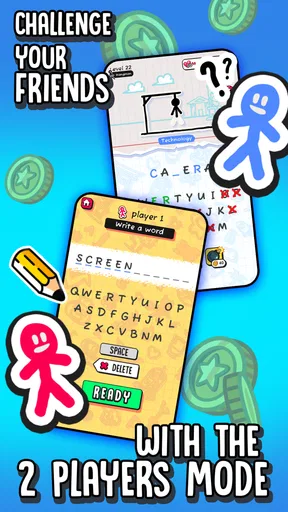
Hangman commonly includes several difficulty options and themed word categories, allowing both beginners and experienced players to enjoy the game. Easier levels usually contain familiar, shorter words and provide more attempts, while advanced levels may use longer or less common vocabulary. Depending on the version, you may also find timed rounds, daily puzzles, challenges, or two-player modes.
Is Hangman suitable for children and language learners?
Hangman can be a useful and entertaining choice for children, students, and people learning English because it encourages spelling, vocabulary recognition, and careful letter selection. Parents should still check the available categories and advertising settings, since word lists and content can vary between versions. Some editions may also include hints or adjustable difficulty to support younger players.
Is Hangman free to download, and does it contain ads or in-app purchases?
Many Hangman apps are free to download and offer the main word-guessing experience without an upfront payment. Free editions commonly display advertisements, especially between rounds, and may offer optional purchases to remove ads, unlock categories, obtain hints, or access extra game modes. Before downloading, review the store listing and privacy details so you understand any costs or permissions involved.
Play our best games!


